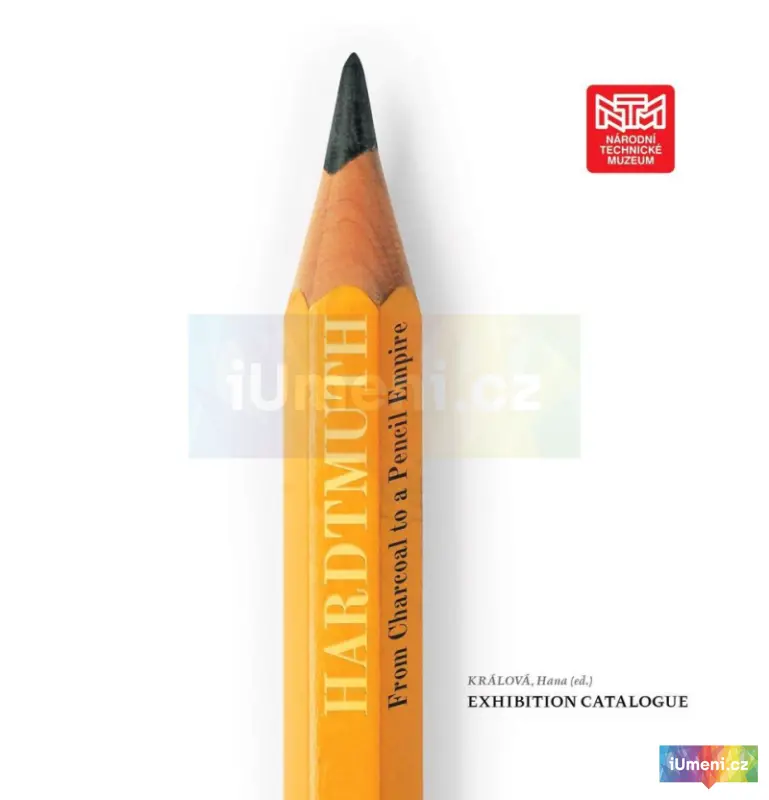
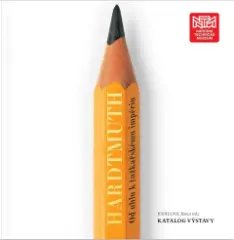
HARDTMUTH: From Charcoal to a Pencil Empire
Autor: Hana Králová (ed.)•Česky•2022•Národní technické muzeum
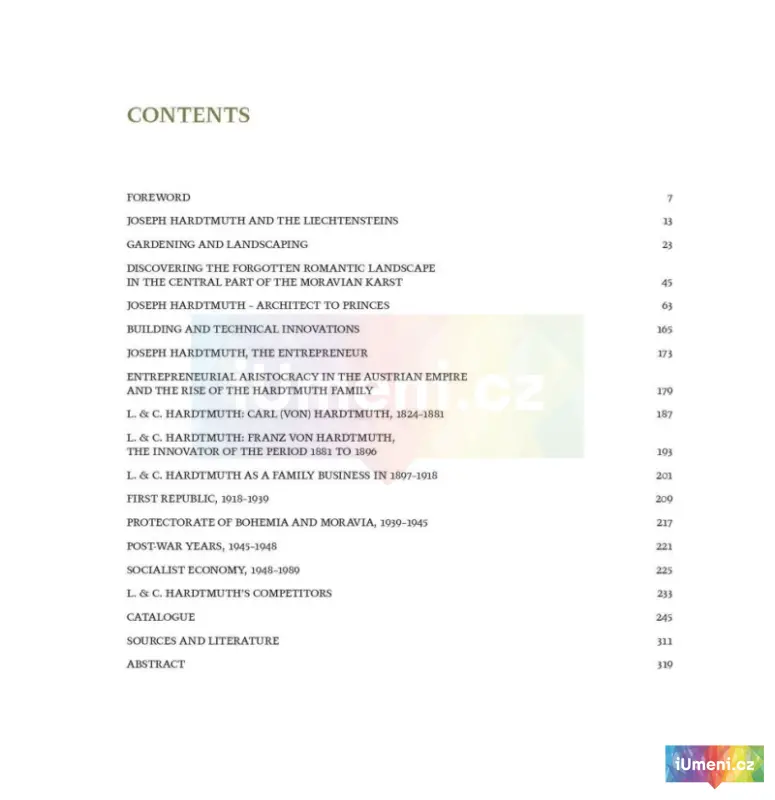
Katalog výstavy Hardtmuth: od uhlu k tužkařskému impériu představuje v první části osobnost architekta Josepha Hardtmutha a jeho dílo na řadě dosud nepublikovaných plánů a to jak dochovaných, tak nedochovaných staveb, které dokládají široký okruh jeho působnosti.
Název: HARDTMUTH: From Charcoal to a Pencil Empire • ISBN: 978-80-7037-393-4 • Jazyk: česky • Rok: 2022 • EAN: 9788070373934 • Hmotnost: 0.90 kg • Vazba: vázaná • Počet stran: 319 • Rozměr: 245x250 mm • Nakladatel: Národní technické muzeum
Detail knihy ~ HARDTMUTH: From Charcoal to a Pencil Empire, Hana Králová (ed.)
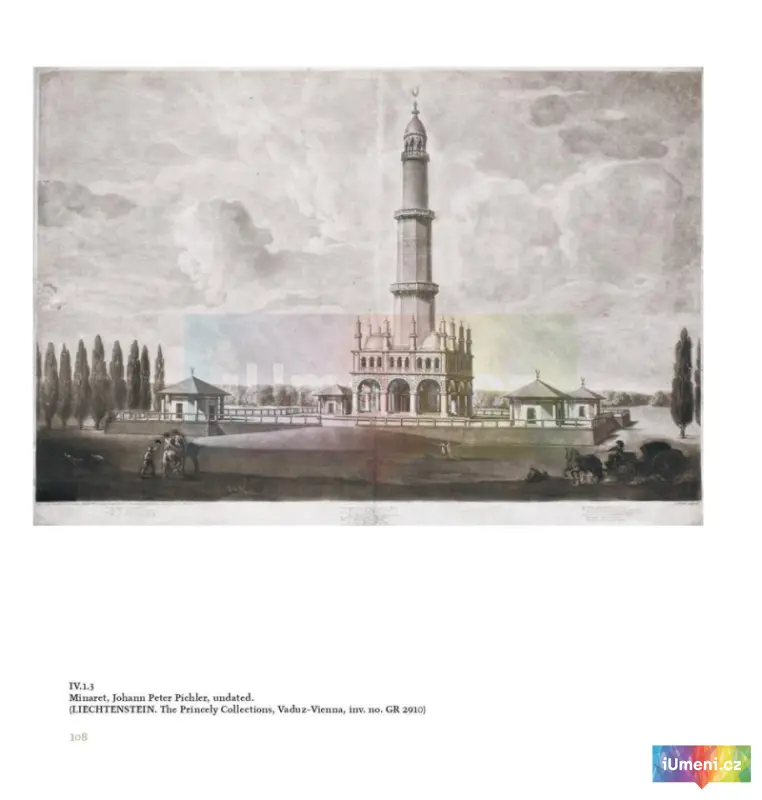
In its first part, the catalogue of the exhibition “Hardtmuth: From Charcoal to a Pencil Empire” explores the personality of the architect Joseph Hardtmuth and his work on a number of unpublished plans relating to both extant and unpreserved buildings and illustrates the wide range of his activity. In addition to well- known projects, such as the Minaret, the Aqueduct in Lednice Park and Belveder near Valtice, the catalogue presents plans for a number of other buildings, including castles, churches, schools, imitation ruins and obelisks and other structures beautifying the romantic landscape as well agricultural and service buildings. Also of note is Hardtmuth’s collaboration with landscape architects in the creation of landscape compositions, particularly in the Lednice-Valtice Area, a UNESCO World Heritage Site, but also in the urbanist integration of buildings into landscapes of various types in the region located along the borders between Austria and Moravia. The second part of the exhibition and the catalogue focuses on Joseph Hardtmuth as an entrepreneur, inventor and founder of a company. Although possessing no formal technical training, Hardtmuth came up with many innovations, including a method of producing pencil lead from an inferior type of graphite, a new process in the manufacture of tableware called Viennese stoneware, which entailed a lead-free glaze, unique at that time, an artificial pumice and Naples yellow. The history of the Hardtmuth family continues with Joseph’s son Carl, who, despite being the youngest of four brothers, took over the factory founded by his father and, in order to ensure its further development, moved it to České Budějovice in 1848, where there were plenty of resources in the surrounding area. In the beginning, Carl was assisted by his older brother Ludwig, which is why the name of the factory was L. & C. Hardtmuth from 1828, featuring the initials of the first names of both brothers. Carl Hardtmuth achieved considerable business success and raised the social prestige of the family, as he was made a nobleman by Emperor Franz Joseph I for his accomplishments. Carl’s son Franz followed in his father’s footsteps and, in the spirit of his grandfather, introduced a range of innovations that had an impact not only on the L. & C. Hardtmuth company, but also on its competitors and the entire pencil industry. First and foremost among them was a new product, the Koh-i-noor pencil, launched in 1889, which had a completely atypical casing colour: yellow. This soon became a symbol of quality and known all over the world. Furthermore, Franz managed to build the “Bohemian graphite mill”, which made it possible to use the hitherto neglected crystalline graphite instead of the amorphous graphite used previously, and also to determine the hardness of the resulting pencil leads according to the composition of the mixture. This led to another of his inventions, the seventeen-degree scale, which used a combination of letters and numbers to denote hardness.HARDTMUTH: From Charcoal to a Pencil Empire